18+

Adults Only

This site discusses adult AI companions and is intended for users 18 years or older. By continuing, you confirm that you are an adult and that you will follow the provider's age and content rules. If you are under 18, leave now.

Exit
Some links on this page are sponsored partner links.
Independent Buyer Review

OurDream AI Review: Directing Your Companion

An independent OurDream AI review examining character creation depth, visual consistency, and narrative memory for adult creators. Sponsored links disclosed.

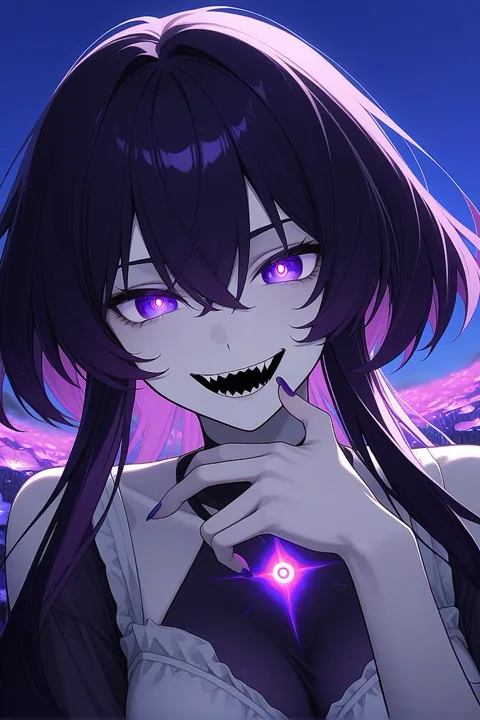
Dark sorceress — OurDreamMona Newman — Candy AI
ourdream ai review

OurDream AI Review: Directing Your Companion

OurDream positions itself as a visual companion studio rather than a text-first chatbot. In this review, we look at the creative loop you enter when you design a character: how much say you get over appearance, tone, and backstory; whether those choices hold together across scenes; and what the provider says about memory and boundaries. We do not test on your behalf. We read the public onboarding flow, the stated policies, and the available examples, then translate that into a storyboard of decisions. The goal is to help you judge whether directing a companion here feels like meaningful authorship or like filling out forms. Adults only.

OurDream is a visual-first companion studio, not a quick-chat utility. Compared to text-only rivals, the immediate difference is the emphasis on designing a character before conversation. If you are a visual worldbuilder, this is the core appeal. If you are a story-driven user, the question becomes whether that visual shell supports narrative continuity. On memory, the provider describes features, but the details remain something you should verify. The creative loop feels closer to casting a character than tweaking settings, but you must decide whether that level of control matches your patience. Pricing, free limits, and content rules change; confirm current partner details before paying. Sponsored links may appear; they do not shape the criteria.

Some links on this page are sponsored partner links. We label them clearly. They never influence the criteria we apply or the order in which we discuss features. We do not receive payment for positive coverage, and we are not affiliated with OurDream.

How We Assess the OurDream Studio

OurDream AI review here is structure around the decisions a creator makes before and during use. We avoid scores. Instead, we lay out the axes that matter to visual worldbuilders, story-driven users, and creative controllers. For each axis, we state what the buyer wants to know, what evidence we can honestly use, and what shape a useful answer takes. Because we do not create private accounts for testing, our evidence comes from publicly visible tools, provider statements, and shared examples. You should treat every finding as a starting point for your own verification on the provider's site. This method keeps the review honest about its limits while still being useful to an adult creator who wants to know where their control begins and ends.

01

Character Creation Depth

Before you speak to a companion, how many levers do you have? OurDream shows a creation flow—visible in public materials—that asks for traits, appearance notes, and narrative anchors. The important part is not the number of fields but whether they influence the character later. A deep system lets you define personality edges, not just a hairstyle. We watch for whether the provider lists adjustable traits separately from written prompts. If everything funnels into a single text box, the experience is closer to open prompting. If there are distinct controls for look, voice, and backstory, the studio metaphor holds. We also note which parts are described as free versus part of a subscription, but we do not state prices.

This matters most to visual worldbuilders and creative controllers who want to shape a character before investing conversation time.

Open the public creation page. List each adjustable field. Check whether appearance, tone, and backstory are separate controls or one prompt. Confirm free limits on the provider's site.

02

Visual Consistency Across Scenes

A companion that looks different in every message breaks the cinematic illusion. OurDream's public examples suggest a focus on keeping a character's look stable, but the proof is in the shared outputs—not in the marketing copy. We look at whether the same character appears with recognizable features across different scenes. We avoid claiming we generated anything privately. Instead, we report what is publicly visible and flag sample size as a caveat. Consistency depends on how the system remembers both visual description and narrative context. If the provider separates appearance from story memory, consistency may hold better. If not, drift is more likely. You should gather your own examples from community posts or the provider's gallery.

Aesthetic comparers and visual worldbuilders who need a character to remain recognizable rather than shifting with each scene.

Study publicly shared character images from one creator. Ask whether the face, palette, and style stay consistent. Note how many examples you find before drawing conclusions.

03

Narrative Memory and Continuity

Story-driven users do not want to repeat themselves. OurDream's provider makes statements about memory, but memory is one of those features that can mean many things: remembering your name, remembering a storyline, or remembering a character's established backstory. We report only what the provider states, not what we infer. If the provider describes persistent memory, we ask what is stored and for how long. If it describes session-based memory, we say that. The difference matters for long-form arcs. We also watch for whether memory is tied to the character or to the account. Our useful answer is a short statement of what is advertised, plus a note on what remains unclear. You should ask support directly about memory duration before committing.

Story-driven users and creative controllers who treat chat as a continuing narrative rather than a series of isolated prompts.

Read the provider's help pages on memory. Note whether it says 'persistent' or 'session' memory. Ask support how long story details persist and whether you can clear them.

04

Creative Control vs Ease of Use

There is a trade-off between directing a film and filling out a form. OurDream's visible onboarding leans toward guided creation, which can feel empowering or tedious depending on your temperament. A filmmaker wants control over shots; a casual user may want a one-click companion. The provider appears to offer a structured path, but you must decide whether that structure helps or slows you down. We describe this axis with a metaphor: is the experience closer to casting a character than tweaking settings? If casting, expect deliberate choices and slower starts. If tweaking, expect quick adjustments. Neither is better; they suit different creators. We do not score ease because ease is subjective and feature sets change.

Creative controllers who want fine-grained authorship and are willing to spend time in setup, rather than users seeking instant chat.

Walk through the public onboarding description. Count how many decisions you must make before you can chat. Decide whether that pace matches your creative process.

05

Content Boundaries and Policies

Every companion platform draws lines somewhere. OurDream's terms and visible warnings set the boundaries for stories and visuals. We do not interpret beyond what is published. Instead, we list the stated restrictions as bullets you can check yourself. Common categories include age requirements, prohibited themes, and consent-related rules. Because this site is for adults, we also note the 18+ requirement. The provider may restrict certain visual content, certain storylines, or certain words. Those restrictions can change without notice. Our advice is to read the current terms before you invest in a subscription and to treat any summary—ours included—as a snapshot. If a boundary is unclear, do not assume; ask the provider.

All adult creators, especially those whose stories touch sensitive themes and who need to know the provider's stated limits.

Read the provider's terms and content policy. Look for an age gate and a list of prohibited content. Note the date of the policy to see how current it is.

06

Exit, Export, and Deletion

A creative studio should let you save your work or walk away cleanly. OurDream's help center or privacy policy may state whether you can export characters, dialogues, or images, and whether you can delete your data. We report only what those documents say. If the policy is silent, we mark it unknown. This is not a minor detail: if you invest hours into a narrative, you need to know whether it lives only on the provider's servers. Deletion rights vary by region and by subscription status. We look for clear instructions, not vague promises. Our answer shape is a yes/no/unknown for export and deletion, with source links. You should check these yourself before paying, because policies can change.

Creators who care about data ownership, privacy, and the ability to leave a platform without losing their creative work.

Search the provider's privacy policy for 'delete', 'export', and 'data retention'. If you cannot find an answer, contact support and keep the reply.
What to Check Before You Commit

Content boundaries are set by the provider, not by this review. OurDream may restrict certain themes, visuals, or words. Those rules can change without notice. Read the current terms and content policy on the provider's site, and do not assume that a feature you saw yesterday will be allowed tomorrow.

Memory is advertised, but the details are usually vague. Does OurDream remember a character's backstory across sessions, or only within one conversation? The answer affects whether long-form storytelling works. Ask support directly and save the reply before you pay.

Visual consistency is difficult to guarantee. Public examples may show a character looking stable, but sample size is often small. Your own results can vary because generation systems are probabilistic. Treat consistency as a property to test, not a promise.

Pricing, free limits, and subscription tiers are controlled by the partner. We do not list fixed prices because they change. Before committing, confirm the current cost, what the free plan includes, and whether billing renews automatically. Check the cancellation policy.

Data export and deletion are not universal. If you invest hours in a character, you need to know whether you can save or delete that work. The provider's privacy policy may be silent. If it is, assume you cannot export and plan accordingly.

Companion Options in the Visual Space

The adult AI companion market is not one product. OurDream sits alongside other names that emphasize different strengths—some text-first, some visual, some niche. Below we summarize each option neutrally so you can compare creative control, memory, and visual direction. We do not rank them. We do not claim first-hand testing. We present what each provider states publicly and where you should verify current details. Use these summaries as a storyboard of alternatives, not as a final verdict.

Questions Creators Ask

What makes OurDream different from text-only companions?

The stated difference is a visual-first studio approach. Text-only companions usually prioritize conversation and memory, with little control over appearance. OurDream presents character creation as a visible step, asking for look, tone, and backstory before chat. Whether that visual layer meaningfully changes the conversation is something you must verify. We can only report that the provider advertises visual customization and scene-setting as core features. If you want a companion you can see and shape, that is the appeal. If you only care about text, you may find the creation flow adds steps without adding value.

How much can I customize a character's look?

The provider describes adjustable traits and appearance settings in its public materials. The exact depth is not fully clear from outside. You may be able to define face, style, and palette, or you may be limited to a text description that guides generation. The difference matters: separate visual controls give more predictable results than a single prompt. Check the creation page for distinct fields. Look for evidence that appearance is stored separately from personality and story. Also note which customization options are free and which require a subscription. Because features change, confirm the current toolset on the provider's site before assuming a specific level of control.

Does the character remember story details?

OurDream's provider makes statements about memory, but memory can mean many things. It might remember your name, the current scene, or a character's entire backstory. The provider's help pages should clarify whether memory is session-based or persistent. We do not infer behavior from marketing. If the policy says 'persistent memory', ask how long it lasts and whether you can clear it. If it says 'session memory', plan for short arcs. Memory also affects visual consistency if appearance is stored with story context. For long-form storytelling, this is a critical question. Contact support and keep the answer before you subscribe.

What are the content limits?

Content limits are defined by the provider's terms and visible warnings. They may prohibit certain themes, visual content, or language. This site is for adults, and the platform requires users to be 18 or older. We cannot list every restriction because policies change. Instead, read the current terms and content policy on the provider's site. Look for a prohibited content list and an age gate. If a boundary is ambiguous, ask support rather than guessing. Remember that enforcement can vary, and a feature that works today may be restricted later. Treat the provider's documents as the authoritative source, not this review.

Is there a free version?

The provider may offer a free plan or trial, but the details are partner-controlled and subject to change. Free access often comes with limits on messages, character slots, or customization depth. We do not state fixed limits because they change. Check the provider's pricing page for what the free tier includes, whether it requires a credit card, and how it differs from paid tiers. Also look for any automatic renewal terms. If you intend to use OurDream seriously, assume you will need a subscription for full creative control, but verify the current offer. Do not rely on older descriptions, including ours.

Can I delete my data?

Deletion and export rights are stated in the provider's privacy policy, if at all. The policy may explain how to delete an account or specific data, and whether deletion is immediate or delayed. If the document is silent, treat export and deletion as unavailable. Before you invest in a long story, search the privacy policy for 'delete', 'export', and 'retention'. If you find clear instructions, follow them. If not, contact support and ask directly. Keep a record of the response. Data practices can vary by region and subscription status, so your rights may depend on where you live and what you paid for.

Visit OurDream

Media and examples referenced on this site come from public provider materials and shared community posts. We do not host private generation outputs. If you believe content is misattributed, contact us and we will correct or remove it.

How We Assess the OurDream Studio

Visual worldbuilder

Wants a companion that looks and feels consistent across sessions.

Seeing how character appearance can be adjusted without losing identity.

Story-driven user

Cares more about narrative continuity than quick replies.

Evidence that backstory and tone persist over multiple conversations.

Creative controller

Frustrated by companions that drift off-character.

A clear list of adjustable traits and boundaries.

Aesthetic comparer

Wants to know if OurDream looks better than alternatives.

A side-by-side of visual customization options, not scores.

The Creative Loop, Panel by Panel

1

Panel 1: Casting the Character

You begin by deciding who this companion is. In OurDream's visible flow, that means choosing a look, a tone, and some backstory anchors. Think of it as casting: you are not writing every line, but you are setting the constraints that make the performance believable. The key question is whether these choices are separate controls or a single prompt. If they are separate, you are directing. If they collapse into one box, you are prompting a model and hoping. Before you start, note which fields are free and which require a subscription. Because we do not test privately, we rely on public descriptions. Your job is to read those descriptions with a creator's eye and decide whether the casting process feels rich enough for the stories you want to tell.

2

Panel 2: Setting the Scene

Once the character exists, you place them in a scene. OurDream's visual focus suggests that scene-setting is part of the appeal—not just what is said, but where and how it looks. A strong studio metaphor means you can adjust context: location, mood, maybe a visual palette. The provider may offer presets or free-text scene descriptions. Either way, the creative loop depends on whether the scene affects the companion's responses and appearance. If changing the scene changes nothing, the visual layer is decorative. If it shifts tone and imagery, you are worldbuilding. We cannot verify private scene generation, so we look for public examples of characters in different settings. That tells you whether scene-setting is a real axis of control or a light wrapper.

3

Panel 3: Directing the Conversation

The conversation is where the character either holds together or drifts. You will notice consistency in voice and memory—does the companion recall the backstory you set? Does the tone stay within the boundaries you chose? OurDream states memory features, but the proof is in use. As a creator, you can respond like a director: reinforce traits, correct drift, introduce new story beats. The provider's controls may allow you to reset or adjust on the fly. We do not claim to know how well this works in private accounts. We only report what the provider advertises and what public users share. Your task is to test with a small story first, then decide whether the directing experience feels rewarding. If it feels like busywork, the loop is not for you.

4

Panel 4: Saving or Resetting the Take

Every film has multiple takes. The final panel asks what you can keep and what you can discard. OurDream's policies may let you save characters, export conversations, or delete your history. We report only what the help center says. If export exists, you can build a library. If deletion is clear, you can experiment without permanent residue. If neither is documented, treat your creations as ephemeral. Before you invest in a subscription, check these options on the provider's site, because they affect how freely you can create. A studio that lets you save takes encourages risk; one that does not may make you cautious. This is your exit and your archive, and it deserves a direct look.

Review the current OurDream features and termsVisit OurDream — OurDream